


AI Vs Human – Information Warfare
“AI Vs Human: Battle for Supremacy – Dive into the world of information warfare and discover who holds the upper hand in the era of advanced AI systems.”
In the age of rapid technological advancement, a new kind of battle has emerged—the battle for supremacy in Information Warfare. In this digital arena, advanced Artificial Intelligence (AI) systems face off against the human intellect. The question that looms large is: Who Dominates? Join us on this journey as we delve deep into the world of Information Warfare, where AI and Humans compete for control, power, and the future of data-driven conflict. It’s a story of wits, strategies, and the relentless pursuit of dominance in the digital realm. So, let’s uncover the secrets and unravel the mysteries of this epic showdown.
The term “information warfare” encompasses a broad spectrum of activities revolving around acquiring, manipulating, or disrupting data to achieve strategic objectives. It encapsulates tactics such as cyberattacks, disinformation campaigns, data espionage, and more. As the world grows increasingly interconnected, our reliance on digital infrastructure and data has surged, rendering information warfare a potent tool for influencing, controlling, or crippling both nations and organizations. On one side of this digital divide stand humans—the architects and operators of AI systems. These individuals harness the capabilities of AI to wage digital battles, utilizing algorithms, machine learning, and data analytics to gain a competitive edge. AI, in their hands, becomes a formidable weapon capable of identifying vulnerabilities, predicting enemy actions, and executing tasks with remarkable precision and speed. The rise of AI has ushered in an era of autonomous decision-making, enabling rapid adaptation and real-time vulnerability exploitation in information warfare. AI operates tirelessly without human constraints like fatigue or ethics, providing a significant advantage, especially in cyber defense.
AI rapidly analyzes vast datasets, offering valuable insights for information warfare strategy, but it’s reliant on training data, which may contain biases, and its ‘black box’ algorithms can be challenging to interpret. The risk of AI misuse is a concern. In contrast, humans bring creativity, adaptability, and ethical judgment to the digital battlefield, making their role indispensable. Although AI can generate extensive content, the human art of persuasion, nuanced messaging, and comprehension of human psychology remain vital for the strategic implementation of disinformation campaigns.
Introduction
The emergence of artificial intelligence (AI) has brought about a paradigm shift in how nations and organizations approach information warfare. AI’s capabilities are nothing short of extraordinary, and its impact on the digital battlefield is profound. It possesses the unique ability to process and analyze vast datasets at lightning speed, making it an invaluable tool for governments, corporations, and even individuals engaged in the intricacies of modern conflict.
In the realm of information warfare, AI’s multifaceted role extends across various domains. One of its most critical functions is in bolstering cybersecurity defenses. AI-powered systems can detect and respond to cyber threats in real time, significantly enhancing a nation’s or organization’s ability to protect its sensitive information and critical infrastructure. The speed and precision with which AI identifies and mitigates cyberattacks provide a significant advantage in the ongoing battle against digital adversaries. Moreover, AI’s prowess extends to the realm of disinformation campaigns. It can analyze vast amounts of online content, identifying patterns and trends that human analysts might overlook. This capability enables the rapid detection of disinformation efforts, helping to safeguard public opinion and trust in the face of misinformation campaigns.
In essence, AI’s role in information warfare is transformative. Its ability to process data, adapt to evolving threats, and operate at speeds far beyond human capacity challenges traditional notions of warfare. As we navigate this ever-evolving landscape, the critical question remains: Who holds the upper hand in this digital battleground, where humans and AI systems vie for dominance?
The Power of AI in Information Warfare
1# Cybersecurity
AI plays a pivotal role in strengthening cybersecurity measures, presenting a profound advantage in the realm of information warfare. Its ability to enhance digital defenses lies in its capacity to operate at speeds and levels of precision that far surpass human capabilities.
AI-powered cybersecurity systems are designed to monitor and analyze network activities continuously. They excel at identifying anomalies and patterns that may indicate cyber threats, even subtle ones that could easily elude human detection. The real-time monitoring capabilities of AI enable it to swiftly detect potential security breaches or unusual behavior within a network.
What sets AI apart is its ability to respond instantaneously to identified threats. Upon detecting a cyberattack or a security breach, AI systems can execute predefined responses, such as isolating compromised devices or blocking suspicious network traffic. This rapid and automated threat mitigation is crucial in thwarting attacks before they can cause significant damage.
Nations and organizations that have embraced AI-driven cybersecurity measures enjoy a substantial advantage in safeguarding their digital infrastructure. They can proactively defend against a wide range of cyber threats, from malware and phishing attacks to sophisticated state-sponsored intrusions. As a result, AI empowers them to protect sensitive information, critical systems, and the integrity of their operations in an increasingly digital and interconnected world.
You Might be Interested In:
Generative AI: Empowering or Threatening Cybersecurity & National Defence
What is identity protection in cyber security?
The Impact of AI on Cybersecurity
The Future of Cybersecurity in an AI-Driven World
2: Data Analysis
AI’s data analysis capabilities are truly exceptional. When it comes to delving into extensive datasets to unearth valuable insights, AI systems are unrivaled. In the context of information warfare, this proficiency becomes a strategic asset. AI algorithms can effectively extract critical intelligence from the vast expanse of online data. They have the capacity to identify emerging trends, predict adversary behavior, and assess the impact of disinformation campaigns. This data analysis prowess equips nations and organizations with a powerful tool to comprehend, anticipate, and counteract threats within the dynamic landscape of information warfare. In an era where data is a prized resource, AI’s ability to navigate, interpret, and derive actionable knowledge from this sea of information can spell the difference between success and vulnerability in the modern battlespace. As AI continues to advance, its role in information warfare is poised to become even more central, shaping the future of conflict and security strategies.
Here’s an example to illustrate AI’s data analysis capabilities in the context of information warfare:
Imagine a scenario where a nation is facing a disinformation campaign aimed at spreading false narratives about its government. AI-powered systems are deployed to analyze social media trends, news articles, and online forums. These AI algorithms sift through vast amounts of data, identifying patterns of suspicious activity and pinpointing the sources of disinformation. They can detect the use of fake accounts, track the propagation of false stories, and even predict which narratives are likely to gain traction.
By harnessing AI’s data analysis capabilities, authorities can swiftly respond to the disinformation campaign. They can counter false narratives with factual information, target their messaging to specific demographics, and dismantle the credibility of fake accounts. This proactive approach not only mitigates the impact of the campaign but also serves as a deterrent to future attempts at spreading disinformation.
3: Automation
Automation, powered by AI, presents a transformative paradigm in the landscape of information warfare. This shift is akin to delegating routine and time-intensive responsibilities, like the administration of social media profiles and the distribution of propaganda, to AI-driven systems. As a consequence, human operatives can redirect their energies toward the realms of strategic deliberations and tactical insights. For instance, consider the utilization of AI in managing social media presence during a disinformation campaign. AI algorithms can autonomously schedule posts, analyze engagement data, and respond to user queries, all while maintaining a consistent online persona. This automated approach ensures that a substantial portion of the campaign’s logistical demands are met with efficiency and precision.
In this context, human operatives can concentrate on formulating more sophisticated disinformation strategies, devising compelling narratives, and adapting to real-time developments. By entrusting repetitive tasks to AI, they gain the latitude to make well-informed decisions that steer the course of information warfare.
The Human Element
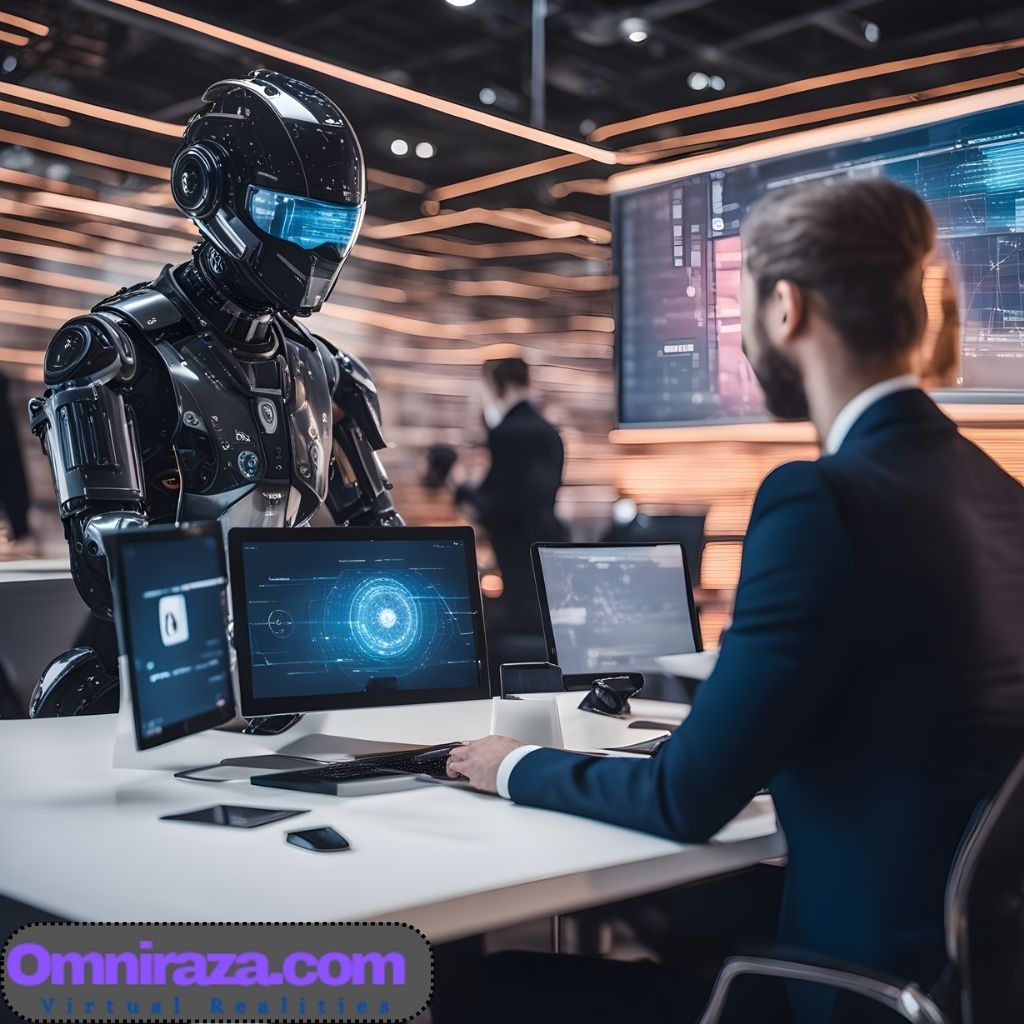
In the realm of information warfare, human discernment complements AI’s computational might, infusing strategy with creativity, decision-making with ethics, and campaigns with authenticity. While AI excels in data processing and threat detection, the human element’s cultural, psychological, and ethical understanding remains unparalleled, especially in crafting persuasive narratives and navigating sociopolitical nuances.
Consider, for example, the development of a disinformation campaign targeting a foreign adversary. AI can efficiently identify potential vulnerabilities and devise strategies for exploitation. Yet, it is the human touch that crafts the narrative, adapts to shifting sociopolitical landscapes, and navigates the subtle nuances of influence.
Ethical Considerations
AI’s role in information warfare raises significant ethical concerns, particularly in its potential to manipulate public opinion at an unprecedented scale. To address these challenges responsibly, stringent ethical frameworks and robust oversight mechanisms must be established. These measures are essential to uphold transparency, accountability, and adherence to international norms, ensuring that AI contributes to truth, justice, and global stability.
Adaptability and Creativity
Human adaptability and creativity stand as formidable assets in the realm of information warfare, where the intricate, ever-changing landscape demands innovative solutions. In this dynamic environment, human analysts excel in anticipating and countering AI-driven strategies, leveraging their capacity to outmaneuver AI initiatives effectively. As we navigate the complexities of information warfare, the synergy of human adaptability and creativity remains our steadfast advantage, enabling us to stay ahead in this high-stakes arena.
Decision Making
In warfare, whether on the battlefield or in the digital realm, ultimate decision-making resides with humanity. Human judgment shapes strategic choices, navigates ethical considerations, and evaluates the risks of information warfare. While technology and AI play vital roles, human wisdom remains the compass guiding us through the challenges and opportunities of this modern battlefield.
Conclusion
In the intricate landscape of information warfare, the harmonious collaboration between artificial intelligence (AI) and humanity emerges as a defining factor. AI’s swiftness, data analysis prowess, and task automation capabilities complement humanity’s adaptability, creativity, and ethical discernment. The future of information warfare hinges on this symbiotic partnership, where AI augments our capacities, and humanity’s moral compass navigates the terrain. It is not AI versus humans; it is a symphony of both shaping the melody of information warfare’s future, where the digital realm meets the enduring wisdom of humanity.
FAQs
Q1: Can AI systems operate independently in information warfare?
A1: AI systems can perform tasks autonomously, but strategic decisions and ethical considerations require human oversight.
Q2: What are the risks of relying too heavily on AI in information warfare?
A2: Overreliance on AI can lead to vulnerabilities if adversaries exploit weaknesses in AI systems. Ethical concerns also arise regarding the responsible use of AI.
Q3: How can humans and AI collaborate effectively in information warfare?
A3: Effective collaboration involves leveraging AI’s strengths in data analysis and automation while ensuring human operators provide critical thinking and ethical guidance.
Q4: Are there international agreements regarding the use of AI in warfare?
A4: Efforts are underway to establish international norms and agreements on the use of AI in warfare, focusing on responsible and ethical practices.
Q5: What challenges do humans face in countering AI-driven disinformation campaigns?
A5: Humans must develop strategies to identify and combat AI-generated disinformation, which can be highly sophisticated and convincing.
In the complex landscape of information warfare, the balance between AI and human capabilities is ever-shifting. The key lies in recognizing the strengths of both and harnessing them to protect the integrity of information and ensure the responsible use of technology in the digital age.

1 Comment
Pingback: Military Operations Redefined: The Dynamic Impact Of Artificial Intelligence - OmniRaza